Travel-service ads must help a reader imagine the experience and judge the offer. Compare itinerary specificity, availability, inclusions and the next booking step.

Lifestyle / destination · Captured 2026-10-20
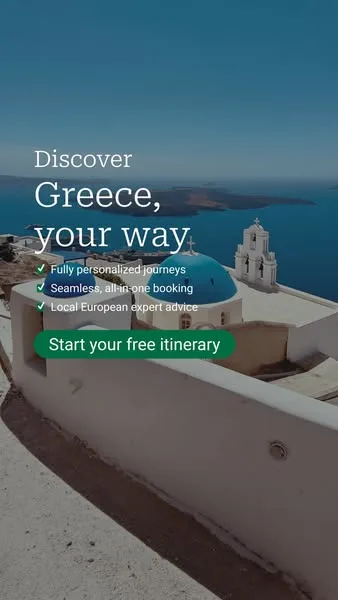
“Plan your trip to Greece for free with a European travel expert. No generic tours, no hidden fees — just personalized journeys crafted around you. Your trip to Greece starts here Get Quote”
The captured copy includes a free, trial or demonstration step. Study how that step connects the promise to an experience of the product.
- Why this approach may work
- A cost comparison gives the reader a concrete decision only when the baseline, period and included features are comparable.
- What to question
- Check eligibility, effort and what happens after the introductory step; the word free alone does not describe the commitment.
- A variation to test
- Compare a demonstration-led opening with a benefit-led opening while keeping the introductory offer fixed.
- Evidence to use
- The actual first-use experience and the terms of the introductory offer.
Static image · Captured 2026-10-20
“See it all: Europe’s icons and hidden gems, from France to Greece. Custom trips planned by local European experts, exactly how you dream it. TOURLANE.COM France, Italy, Greece & more Tailor-made travel See details”
The archive suggests a education and mechanism approach. Use the captured wording to assess that interpretation. The captured next-step label is “See details”.
- Why this approach may work
- A useful explanation connects a visible input, process and result. It gives the reader a reason to believe that the outcome is possible.
- What to question
- Which step in the explanation can the customer verify? Remove technical detail that does not help answer that question.
- A variation to test
- Compare a short process demonstration with an outcome-first opening while keeping the offer unchanged.
- Evidence to use
- A real demonstration of the mechanism and its output.
Comparison · Captured 2026-10-20
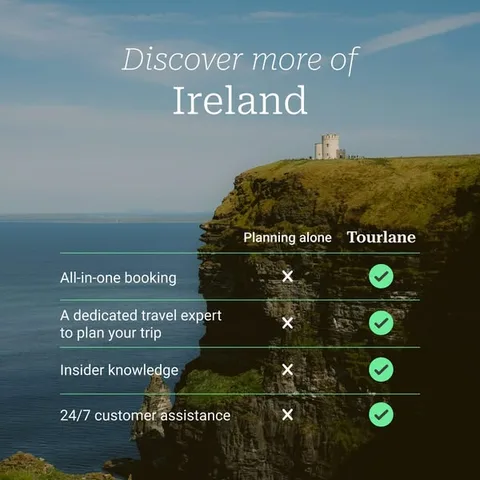
“Spend less time planning and more time exploring. From Italy to Ireland, custom trips planned by local European experts, exactly how you dream it.”
The copy refers to time or a recurring period. Identify the task, routine or delivery expectation attached to that language.
- Why this approach may work
- A useful explanation connects a visible input, process and result. It gives the reader a reason to believe that the outcome is possible.
- What to question
- Distinguish a delivery promise, routine and measured time saving; they need different evidence.
- A variation to test
- Compare the named time-based benefit with a demonstration of the underlying task or routine.
- Evidence to use
- A real example showing the task, time period and relevant conditions.
Claims and offers are reproduced from captured ads. The breakdowns are creative hypotheses to evaluate with your own audience and results.