
Skip to content
IG Ad Library

Travel products and experiences: education and mechanism ads.

Study three education and mechanism ad examples from travel products and experiences. Compare their promises and evidence, then draft a focused creative test.

By IG Ad Library · Updated October 23, 2026

Selected from 35 distinct artworks across 4 advertisers. Archive snapshot: October 22, 2026.

How education and mechanism advertising works

Explain how a solution works so a reader can evaluate the promise. A useful explanation connects a visible input, process and result. It gives the reader a reason to believe that the outcome is possible.

Who the adaptation could serve
A planning audience for your adaptation: travelers preparing for a particular trip or activity. Treat this as a brief-writing starting point; an ad's wording does not reveal the advertiser's actual targeting.
Evidence to prepare
A real demonstration of the mechanism and its output.

Three ads, broken down.

Explain how a solution works so a reader can evaluate the promise. The strongest research question here is what role the product plays in the trip. Compare a destination-led opening with a demonstration that makes its use immediately clear.

Expedia carousel ad: Tasmania = nature showing off. Discover a place that doesn’t try to impress, it just does.🌊🌲

Carousel · Captured 2026-10-20

“Tasmania = nature showing off. Discover a place that doesn’t try to impress, it just does.🌊🌲 EXPEDIA.COM Explore Tasmania Learn More EXPEDIA.COM Encounters beyond the ordinary Learn More EXPEDIA.COM Flavors worth the journey”

The archive suggests a education and mechanism approach. Use the captured wording to assess that interpretation.

Why this approach may work
A useful explanation connects a visible input, process and result. It gives the reader a reason to believe that the outcome is possible.
What to question
Which step in the explanation can the customer verify? Remove technical detail that does not help answer that question.
A variation to test
Compare a short process demonstration with an outcome-first opening while keeping the offer unchanged.
Evidence to use
A real demonstration of the mechanism and its output.
GetYourGuide static image ad: Hand-picked for quality, led by local experts, and backed by reviews.

Static image · Captured 2026-10-20

“Hand-picked for quality, led by local experts, and backed by reviews. GETYOURGUIDE.COM Only the world’s best activities Experiences that deliver Learn More”

The archive suggests a education and mechanism approach. Use the captured wording to assess that interpretation. The captured next-step label is “Learn More”.

Why this approach may work
A useful explanation connects a visible input, process and result. It gives the reader a reason to believe that the outcome is possible.
What to question
Which step in the explanation can the customer verify? Remove technical detail that does not help answer that question.
A variation to test
Compare a short process demonstration with an outcome-first opening while keeping the offer unchanged.
Evidence to use
A real demonstration of the mechanism and its output.
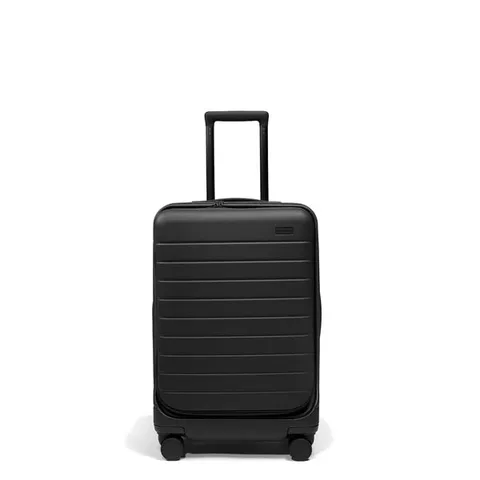
Away static image ad: Away isn't just suitcases. It's a system built for however you travel. Topside Bigger Carry-On in Jet Black is a good place to start.

Static image · Captured 2026-10-20

“Away isn't just suitcases. It's a system built for however you travel. Topside Bigger Carry-On in Jet Black is a good place to start. AWAYTRAVEL.COM Get 10% off your first order.* Shop our new Topside Collection, the deep top opening lug”

The copy contains price or saving language. Read the monetary claim alongside the product, comparison period and purchase conditions.

Why this approach may work
A useful explanation connects a visible input, process and result. It gives the reader a reason to believe that the outcome is possible.
What to question
Which step in the explanation can the customer verify? Remove technical detail that does not help answer that question. Verify the baseline and total commitment before using a similar numerical or promotional claim.
A variation to test
Compare a short process demonstration with an outcome-first opening while keeping the offer unchanged.
Evidence to use
A real demonstration of the mechanism and its output.

Claims and offers are reproduced from captured ads. The breakdowns are creative hypotheses to evaluate with your own audience and results.

What shows up in this collection?

In this 35-artwork set, the most frequent specific angle labels are education / mechanism (35 creatives) and social proof (10 creatives). The selected examples come from Expedia (2026-10-20), GetYourGuide (2026-10-20), Away (2026-10-20). Compare the opening wording and evidence across those examples before choosing one variable to test.

Understand awareness stages
Suggested creative angles in 35 artworks
AngleArtworksShare
Education / mechanism35100.0%
Social proof1028.6%
Freedom / lifestyle617.1%
Problem / frustration25.7%
Product features25.7%

An artwork can have several suggested angles. These are frequencies in the captured archive, not measures of campaign performance.

How this collection was assembled

This page uses 35 distinct artwork hashes across 4 advertisers in the October 22, 2026 archive snapshot. Counts use one canonical captured source per artwork. Angle labels can overlap. Format and awareness labels are research suggestions; they do not establish targeting or results.

How to turn this approach into a test.

  1. 1. Choose the audience situation

    Describe the reader's problem and current alternative. For this context, start with: travelers preparing for a particular trip or activity. Write down what they already understand before choosing an awareness-stage opening.

  2. 2. Change one main creative variable

    Compare a short process demonstration with an outcome-first opening while keeping the offer unchanged. Keep the offer and landing page comparable so you can interpret the creative difference.

  3. 3. Gather proof before production

    A real demonstration of the mechanism and its output. Replace the reference's claims and branding with evidence and assets you can use for your own offer.

  4. 4. Define the result before launch

    A candidate measure here is cost per purchase or booking. Decide the conversion definition, attribution window and decision rule before comparing variants. Use the same reporting basis and record costs alongside response rates.

Turn the reference into your next test.

Adapt the opening, audience and evidence to your own product. Choose one variable to change and a measure that reflects your campaign objective.

Creative test details

Your test brief

Creative test brief

Reference: Expedia — Travel products and experiences: education and mechanism ads

Audience: Travelers preparing for a particular trip or activity

Desired outcome: Choose a useful product or experience for their plans

Opening to test: Compare a short process demonstration with an outcome-first opening while keeping the offer unchanged.

Evidence to show: A real demonstration of the mechanism and its output.

Next action: Choose the next step that matches your offer

Primary measure: Cost per purchase or booking

Comparison: change the opening; keep the audience, offer and destination consistent.

Decide the budget, evaluation window and acceptable acquisition cost before the test.

Free tools for your next test.

All free tools

Plan the inputs, document the idea and calculate the result. No signup required.

Questions about these examples.

What can I learn from these examples?

The examples make education and mechanism advertising in travel products and experiences easier to compare through captured copy, a source link and a hypothesis to test. Which step in the explanation can the customer verify? Remove technical detail that does not help answer that question.

How should I turn a reference into a test?

Compare a short process demonstration with an outcome-first opening while keeping the offer unchanged. Use your own artwork and substantiated claims. For this research context, cost per purchase or booking is a possible primary measure; choose the measure that matches your actual campaign objective.

Do these examples prove which ads performed best?

The archive records creative examples, not advertiser spend, conversions or return on ad spend. Frequency and repeated appearances do not establish performance. Evaluate your adapted idea with your own campaign results.