Routine-based advertising has two jobs: make the desired change recognizable and make the first step credible. Separate taste, convenience and product facts from claims that would need additional substantiation.

Static image · Captured 2026-10-21
“Powerful insights. Refined designed. Oura Ring 5 is 40% thinner and ultra-lightweight, for all-day comfort to stay connected to your health. Oura Ring 5 Quiet tech. Deep insights. Shop Now”
The copy contains price or saving language. Read the monetary claim alongside the product, comparison period and purchase conditions. The captured next-step label is “Shop Now”.
- Why this approach may work
- Routine-based advertising has two jobs: make the desired change recognizable and make the first step credible. Separate taste, convenience and product facts from claims that would need additional substantiation.
- What to question
- Verify the baseline and total commitment before using a similar numerical or promotional claim.
- A variation to test
- Compare a value-first opening with a price-first opening for the same valid offer.
- Evidence to use
- An accurate price or saving calculation, including material conditions.
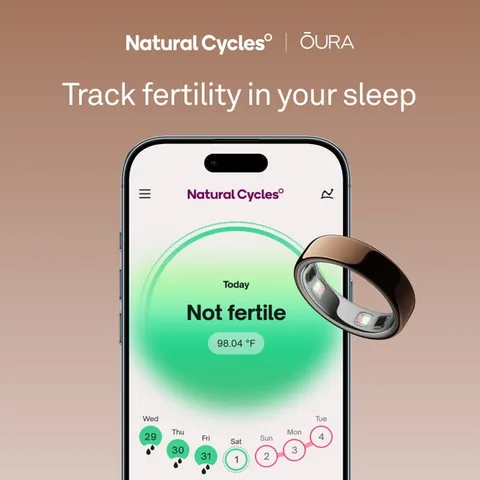
Static image · Captured 2026-10-21
“Demystify your cycle with non-hormonal birth control from Natural Cycles, powered by Oura temperature trends. Oura tracks your temperature trends overnight and syncs with Natural Cycles each morning, so the NC° app can deliver your daily fe”
The archive suggests a static image approach. Use the captured wording to assess that interpretation.
- Why this approach may work
- Routine-based advertising has two jobs: make the desired change recognizable and make the first step credible. Separate taste, convenience and product facts from claims that would need additional substantiation.
- What to question
- Can the main message be understood at feed size before reading the smaller text?
- A variation to test
- Compare two opening headlines on the same image and offer, using identical placement dimensions.
- Evidence to use
- A legible product image and evidence directly connected to the headline.

Static image · Captured 2026-10-21
“Track 50+ key health metrics without compromising on comfort. Oura Ring 5 is slim, sleek, and designed to disappear — while still delivering daily insights to help you improve your health. Oura Ring 5 Track 50+ health metrics Shop Now”
The archive suggests a static image approach. Use the captured wording to assess that interpretation. The captured next-step label is “Shop Now”.
- Why this approach may work
- Routine-based advertising has two jobs: make the desired change recognizable and make the first step credible. Separate taste, convenience and product facts from claims that would need additional substantiation.
- What to question
- Can the main message be understood at feed size before reading the smaller text?
- A variation to test
- Compare two opening headlines on the same image and offer, using identical placement dimensions.
- Evidence to use
- A legible product image and evidence directly connected to the headline.
Claims and offers are reproduced from captured ads. The breakdowns are creative hypotheses to evaluate with your own audience and results.