Study how customer experiences, reviews and outside recognition support an ad's promise. These offers often ask for trust before a result can be experienced. Read the opening alongside eligibility, effort and terms; a simple first step should still explain what the customer is choosing.

Static image · Captured 2026-10-20
““This app made learning fun and addictive.” - Alex, Imprint user APPS.APPLE.COM Start Your Free Trial Today. Install now”
The captured copy includes a free, trial or demonstration step. Study how that step connects the promise to an experience of the product.
- Why this approach may work
- An identifiable experience can make an abstract benefit concrete. The source and circumstances of the evidence determine how much a reader can infer.
- What to question
- Does the quoted experience apply to the audience and outcome in the ad? Keep attribution and important context intact. Check eligibility, effort and what happens after the introductory step; the word free alone does not describe the commitment.
- A variation to test
- Compare a permissioned customer account with a product demonstration of the same benefit.
- Evidence to use
- An attributable customer statement or independently verifiable recognition.

Static image · Captured 2026-10-19
“Stop building simple prototypes. Learn to ship AI agents that actually work with Google experts today. In Google Cloud AI Agents: From Foundations to Enterprise Scale, you'll design and deploy self-thinking agents that automate real work”
The archive suggests a education and mechanism approach. Use the captured wording to assess that interpretation.
- Why this approach may work
- An identifiable experience can make an abstract benefit concrete. The source and circumstances of the evidence determine how much a reader can infer.
- What to question
- Does the quoted experience apply to the audience and outcome in the ad? Keep attribution and important context intact. Which step in the explanation can the customer verify? Remove technical detail that does not help answer that question.
- A variation to test
- Compare a permissioned customer account with a product demonstration of the same benefit.
- Evidence to use
- An attributable customer statement or independently verifiable recognition.
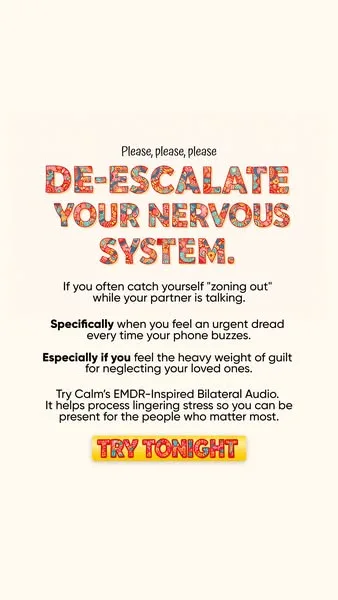
Static image · Captured 2026-10-18
“Never heard of bilateral stimulation? Wondering how sound can calm your nervous system? Curious about EMDR-inspired approaches? Want to try something that actually addresses regulation? Calm's EMDR-Inspired Bilateral Audio uses bilateral”
A question appears in the captured copy. Examine the assumption it invites the reader to make and how the following claim answers it.
- Why this approach may work
- An identifiable experience can make an abstract benefit concrete. The source and circumstances of the evidence determine how much a reader can infer.
- What to question
- Does the quoted experience apply to the audience and outcome in the ad? Keep attribution and important context intact. Does the answer connect to the product's actual capability and the reader's situation?
- A variation to test
- Compare a permissioned customer account with a product demonstration of the same benefit.
- Evidence to use
- An attributable customer statement or independently verifiable recognition.
Claims and offers are reproduced from captured ads. The breakdowns are creative hypotheses to evaluate with your own audience and results.