Start with a recognizable difficulty, then connect it to a credible next step. Routine-based advertising has two jobs: make the desired change recognizable and make the first step credible. Separate taste, convenience and product facts from claims that would need additional substantiation.
Static image · Captured 2026-10-19
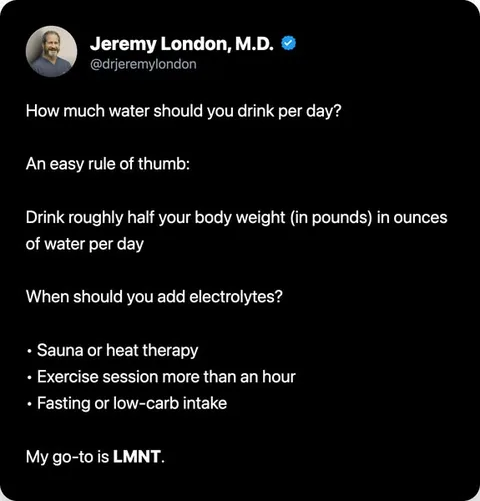
“As a physician, I remind patients that hydration is more than water. LMNT replaces the electrolytes your body loses when you sweat and train. The Missing Piece of Hydration Free U.S. Shipping Shop Now”
The captured copy includes a free, trial or demonstration step. Study how that step connects the promise to an experience of the product. The captured next-step label is “Shop Now”.
- Why this approach may work
- A specific situation helps the intended reader recognize relevance. The transition into the offer must explain why this solution fits that situation.
- What to question
- Is the problem described precisely enough to be recognizable without exaggerating its consequences? Check eligibility, effort and what happens after the introductory step; the word free alone does not describe the commitment.
- A variation to test
- Compare a problem-first opening with a desired-outcome opening for the same audience.
- Evidence to use
- A clear demonstration of how the solution addresses the named problem.
Static image · Captured 2026-10-18
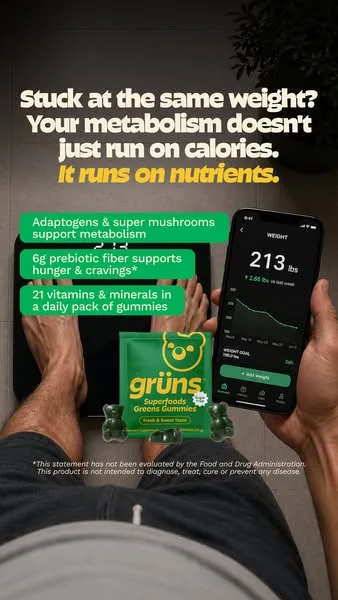
“Struggling to get enough nutrients while losing weight? Grüns Superfood Gummies support daily nutrition with 20+ vitamins and minerals plus 6g of fiber. Sugar free and low carb support for energy, gut health, and overall wellness. Mos”
The captured copy includes a free, trial or demonstration step. Study how that step connects the promise to an experience of the product.
- Why this approach may work
- A specific situation helps the intended reader recognize relevance. The transition into the offer must explain why this solution fits that situation.
- What to question
- Is the problem described precisely enough to be recognizable without exaggerating its consequences? Check eligibility, effort and what happens after the introductory step; the word free alone does not describe the commitment.
- A variation to test
- Compare a problem-first opening with a desired-outcome opening for the same audience.
- Evidence to use
- A clear demonstration of how the solution addresses the named problem.

Static image · Captured 2026-10-19
“DS-01® is the 2-in-1probiotic and prebiotic formulated with 24 scientifically studied strains to deliver benefits in and beyond the gut. 🌬️Reduce gas + bloating 🚽Promote daily bowel movements 💪Sustain immune health° °These state”
The archive suggests a problem and frustration approach. Use the captured wording to assess that interpretation.
- Why this approach may work
- A specific situation helps the intended reader recognize relevance. The transition into the offer must explain why this solution fits that situation.
- What to question
- Is the problem described precisely enough to be recognizable without exaggerating its consequences?
- A variation to test
- Compare a problem-first opening with a desired-outcome opening for the same audience.
- Evidence to use
- A clear demonstration of how the solution addresses the named problem.
Claims and offers are reproduced from captured ads. The breakdowns are creative hypotheses to evaluate with your own audience and results.