Study ads that lead with a named product, its features or evidence. Routine-based advertising has two jobs: make the desired change recognizable and make the first step credible. Separate taste, convenience and product facts from claims that would need additional substantiation.
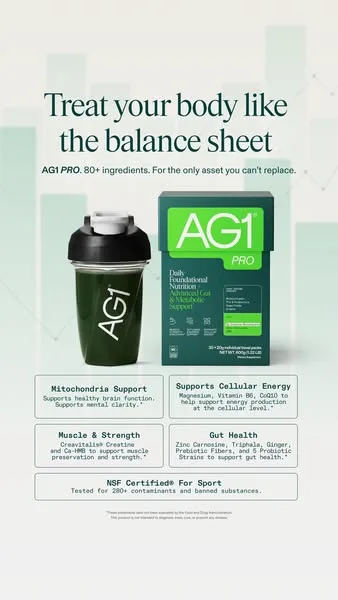
Static image · Captured 2026-10-18
“Sold out after launch. It's back (for now). Built on the clinically backed AG1 Next Gen formula, AG1 Pro adds 5g of Creavitalis® creatine monohydrate, Ca-HMB, and zinc carnosine for advanced muscle and gut support, all in one daily servi”
The archive suggests a static image approach. Use the captured wording to assess that interpretation.
- Why this approach may work
- The ad puts the product near the center of the argument. Its job is to make a particular benefit or distinction worth a next step.
- What to question
- What is new or useful for a reader who recognizes the product name? Can the main message be understood at feed size before reading the smaller text?
- A variation to test
- Compare a feature-led opening with customer evidence for the same product benefit.
- Evidence to use
- A product demonstration or attributable experience tied to the specific benefit.
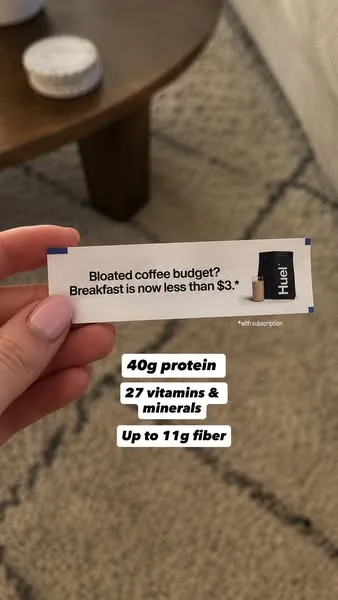
Static image · Captured 2026-10-19
“📊 We asked people to add Huel to their routine for 6 weeks. Most said they: ✅ Felt healthier ✅ Snacked less ✅ Had more consistent energy The common thread? Complete nutrition that actually works. *Results from an independent,”
The copy refers to time or a recurring period. Identify the task, routine or delivery expectation attached to that language.
- Why this approach may work
- The ad puts the product near the center of the argument. Its job is to make a particular benefit or distinction worth a next step.
- What to question
- What is new or useful for a reader who recognizes the product name? Distinguish a delivery promise, routine and measured time saving; they need different evidence.
- A variation to test
- Compare a feature-led opening with customer evidence for the same product benefit.
- Evidence to use
- A product demonstration or attributable experience tied to the specific benefit.
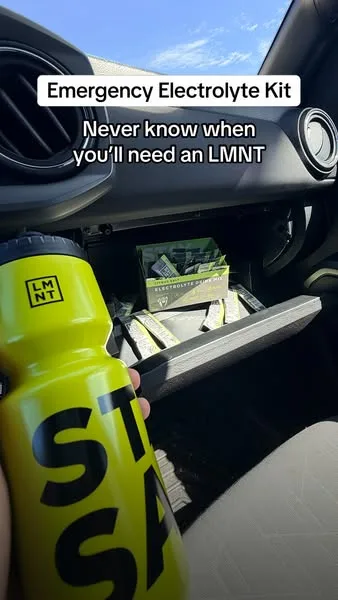
Static image · Captured 2026-10-19
“You need water AND electrolytes. LMNT delivers both. Staying hydrated has never been so easy ⚡ Healthy Habits Start Here 👇 Shop Now”
The archive suggests a static image approach. Use the captured wording to assess that interpretation. The captured next-step label is “Shop Now”.
- Why this approach may work
- The ad puts the product near the center of the argument. Its job is to make a particular benefit or distinction worth a next step.
- What to question
- What is new or useful for a reader who recognizes the product name? Can the main message be understood at feed size before reading the smaller text?
- A variation to test
- Compare a feature-led opening with customer evidence for the same product benefit.
- Evidence to use
- A product demonstration or attributable experience tied to the specific benefit.
Claims and offers are reproduced from captured ads. The breakdowns are creative hypotheses to evaluate with your own audience and results.